Published on 01/10/2021 || Episode 2
The subjects I plan to tackle in the coming episodes can be a source of misunderstanding. Sometimes even of judgement. So before diving in, I wanted to take the time to ask myself: why?
This podcast sets out to spark (or rekindle) questions in you. For maximum accessibility and inclusivity, you’ll find the full script of the episode below — though I of course encourage you to listen to it if you can.
Translated transcript
While I was putting together the long list of topics I want to cover in the next episodes, something became obvious. I had to record this one first. Quite a few of the upcoming episodes call for the right mindset.
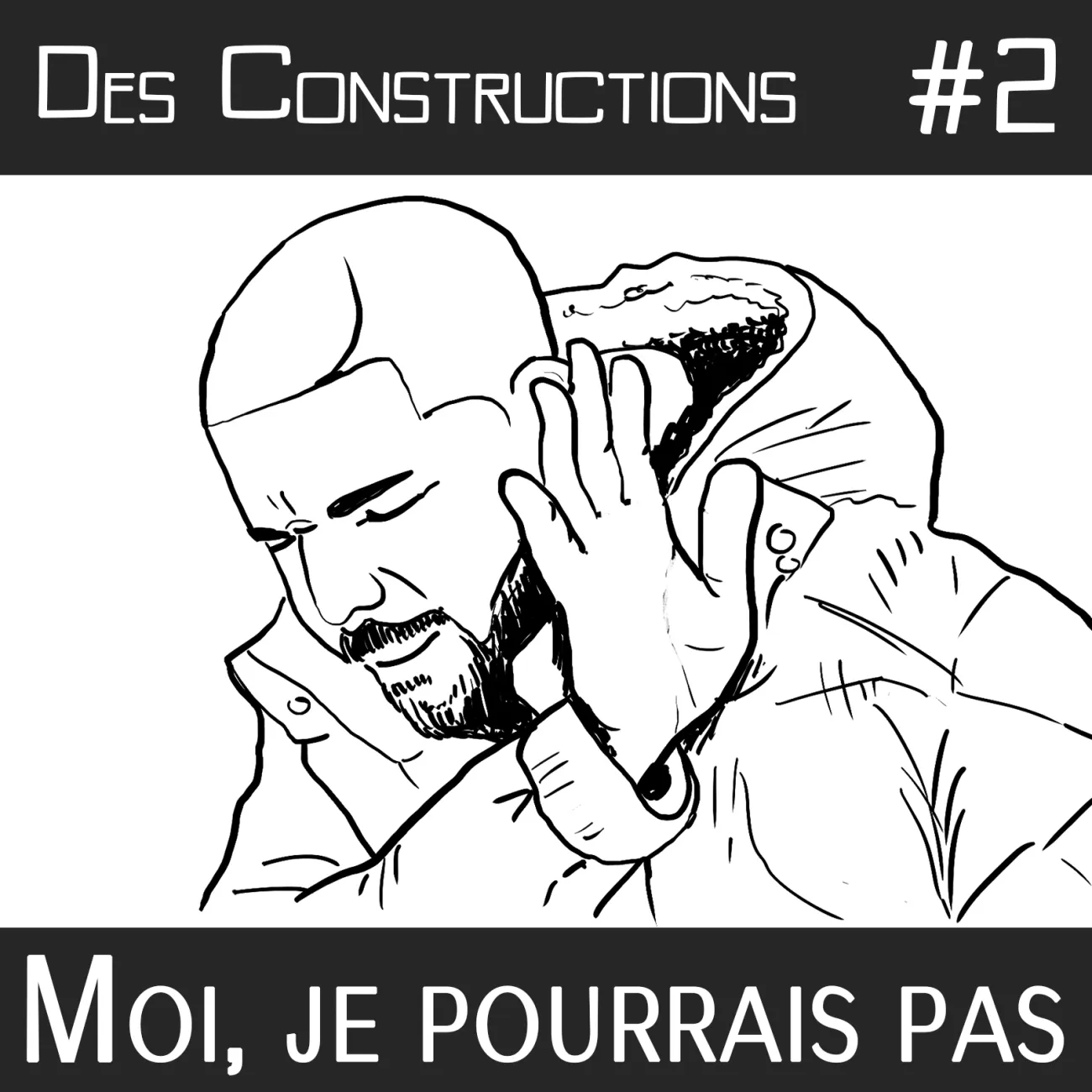
When we’re faced with ways of life different from our own, it’s common to end up saying, “Well, I could never do that!”.
As if the mere suggestion that ways of life other than ours exist were an outright challenge to our own choices. An unwelcome accusation. A sense of unease that bothers us without our knowing why.
Now, obviously, it’s perfectly healthy, and even very welcome, to ask ourselves whether certain choices make sense, or whether to adopt certain ways of life.
Questioning ourselves is a good thing, but what I want us to talk about is quite different. It’s the spontaneous, clear-cut reaction, bordering on repulsion. The unsolicited opinion. In that tone you know so well. “I could never do that” or “I don’t know how you do it”.
And I’ve said that sentence far too often.
Without meaning any harm.
Because despite my supposed open-mindedness, some choices seemed to me to lack moderation, seemed hardly viable, or not “grounded in the ‘real world’”.
I probably still think it sometimes, even though I try to make sure I no longer say it. But nobody’s perfect. Starting with me.
So why do we make it personal?
At what point does it become about us?
What hides behind that sentence is a pernicious, thinly disguised form of judgement. Sometimes envy, too.
Back when I was locked into a model that, I now know, didn’t suit me, seeing people break the social conventions I was forcing myself to obey despite myself frustrated me enormously. Seeing people happy outside the constructs that, I thought, kept our world intact looked to me like a front.
It’s incredible to realise this today. Those fronts I thought I saw them putting up were very much the ones I was using so easily myself. I was even overusing them. As I told you in the first episode, I was suffering from being forcibly assimilated into something I wasn’t.
And obviously that wasn’t only about gender; we’ll talk about it at length in many of the episodes to come.
That’s exactly why this episode matters so much right now. Some topics will speak to you and you’ll agree with me. But when that’s not the case, I’m really counting on our ability to step back and just listen to a different experience. Especially in conversations on social media.
I’m sure that, listening to this, many of you (an overwhelming majority, no doubt) will recognise your own reactions, past or present. Because I don’t think we ever truly escape them.
I’ve slowly learned to spot the moments when I fall into this bias and to try to avoid them as much as possible, even though I sometimes have to force myself to keep some distance from my emotions. Stop, breathe, and ask myself the awkward question: “Is this about me?”, and the one that goes with it: “Is anyone expecting me to do the same?”
Let’s be realistic: in most cases, the person in front of us expects nothing more from us than to be respected for who they are, and for their choices, which are often well thought through, to be respected too.
We sometimes react this way to choices that call ours into question because we struggle to imagine reasonable choices outside of our own. Other times, on the contrary, we’re driven by envy when we see people allowing themselves what our society ostracises. What we sometimes don’t dare do ourselves. It’s even hard to properly identify and tell apart the two motivations that lead to the same result. How many times have you realised that the thing that seemed so far removed from you was actually exactly what you wanted? What you needed?
So I try to keep a cool head. To put things in perspective. To step back so I can come closer afterwards.
I think it’s the same dynamic that helps us best support the people close to us. I’ve often noticed, in myself and in others, this urge to be the hero who rushes to the rescue. Whether or not that help is wanted, by the way. Being let in on a problem that has nothing to do with us gives us the impression we’ve been handed a mission. And that we have no choice but to accept it and see it through. And yet that’s often not the case at all…
Once again, spotting the moment when a confidence and a call for help blur together is tricky! So before I throw myself into unsolicited advice and action, before I make my loved ones’ problems my own, I try hard to remember to ask this very simple question: “Do you want my help, or do you just need someone to listen? And if you want my help, how can I help?”. It sounds silly and obvious, but it isn’t. I’ve often failed. I’ll probably still fail sometimes, despite my vigilance. But I’m working hard to do better. At least, I hope so.
Another pretty telling example of this bias of always wanting to make ourselves the subject of every interaction comes to mind. Another bias we’ll need to keep an eye on as we work through the various themes and questions I have planned.
That bias is refusing to see the scope of an accusation that denounces an unjust system, and trying to bring it down to the level of the individual.
It’s when we hear “Not all men”, wrapped in indignation at the idea that every single man is being personally and specifically targeted by the accusation “Men are trash”.
It’s when we hear “All lives matter” chanted in response to “Black lives matter”, feigning incomprehension by implying that the slogan aims to diminish the importance of every other life, when a community is simply asking for the bare minimum: that their lives count just as much as everyone else’s, when that clearly isn’t the case.
It’s when we hear “there are some good ones” in response to the statement ACAB: “All cops are bastards”. That’s denying that the police institution itself is the problem, and that it crushes, at their own expense, any well-meaning person who joins its ranks.
We live in a system that crushes individuals, and it’s crucial to be able to condemn it. It’s even a duty. And that can only happen through accusations that name the system, not by targeting particular individuals.
Don’t worry, we’ll have plenty of time to look at these topics, and many related ones, in more depth and one by one in dedicated episodes. But it was important to set out, in general terms, the angle I’m going to take.
The next episode will be about relationships and how we can love differently. Just hearing that, I’m sure some of you have already raised an eyebrow.
But that’s for next month.
Until then, I’ll say “see you next time”.